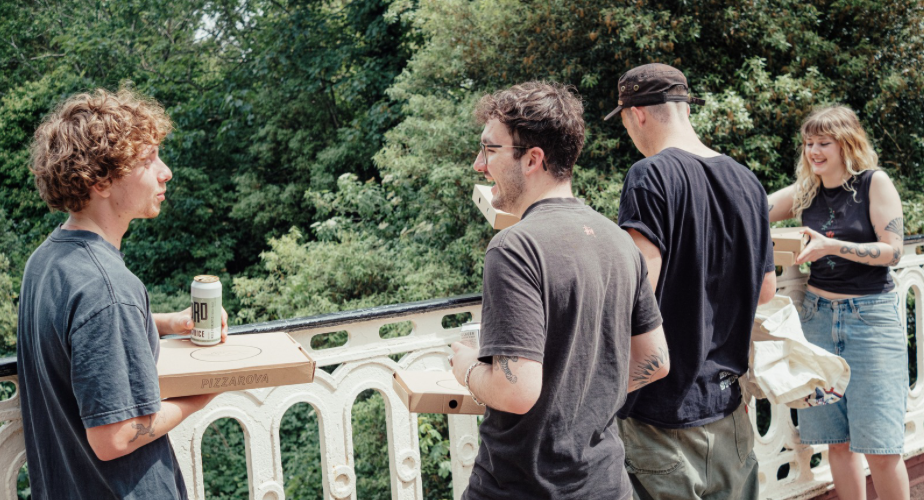
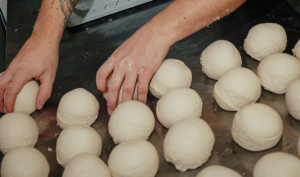
Pick up our sourdough dough balls at any of our sites. Perfect for at home pizza night, just pop in to your local pizzarova or pre-order on our app.
So how do we dough it?
If you’re reading this, you probably already know a thing or two about sourdough starter, but let us introduce ours. We’ve been using the same 80 year old sourdough starter since the Landy days, obviously it was slightly younger back then… as were we.
Let’s start with the starter:
Starter is alive, funky and gives us that tangy crust we love so much. First thing in the morning, every site feeds their mother, got to keep that thing alive! We then mix the starter in water to spread it evenly through the dough, this keeps the fermentation consistent with no dead zones (where the dough doesn’t rise)
Our recipe rocks with a 56/57% hydration dough, for the perfect balance of flop but not too floppy (technical term). If you fancy getting technical, you can call us Neo-Neopolitan. Not Roman or New York, but a Neapolitan hybrid. Handmade daily for control, consistency, and better dough behaviour.
Keep it simple:
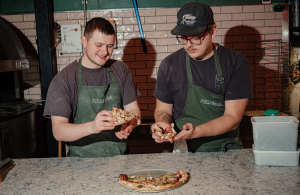
We use Shipton Mill flour, milled over in Gloucester, the best in bizz. Their high protein 00 grade flour is super-fine, absorbing more water for a softer dough overall.
What sets our dough apart from classic Neapolitan is olive oil. Unlike traditional recipes, we use extra virgin olive oil for a crispier, brown crust. Just flour, salt, water, oil and starter. 5 ingredients, no nasties. EVOO allows our dough to become stronger and stretchier, making it easier to shape without tearing. We want super elastic bases that don’t snap or split when we flip them up in the air.
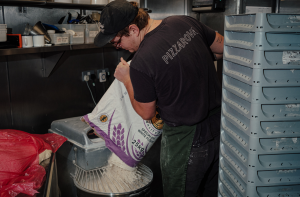
We do two mixes, one with Shipton mill flour, water and starter to build structure. Then a second spin, with oil, to smooth everything out. Mixing twice makes our dough hold gas better resulting in our iconic, airy crust.
Funky fermentation:
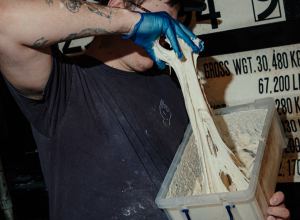
As you know, every batch of Pizzarova dough is proved for 24 hours. Our long, slow fermentation produces that complex, sour tang that can’t be achieved with instant yeast.
Properly proofed dough relaxes, making it much easier to stretch into the perfect pizza base. Proving for longer also creates micro-blisters or “leoparding” on our crust during baking. More time to develop air bubbles means more gas escaping when cooked. The bubbles hit the scorching hot oven and create those little black spots you see on the crust.
To check the cook, we’re looking for a golden, crispy crust, with a chewy, spongy cross section… that can withstand a hefty garlic mayo dunk!